16th April 2019
One of the benefits of being on a long cruise was that Sue and I were spared the daily bombardment from politicians and supporters on both sides of the Brexit debate, who relentlessly manipulated the news 24/7 to further their own agendas. Thankfully, the topic was rarely discussed by our fellow passengers. When it did come up, the conversation was mostly about the national embarrassment of being represented by a pack of self-serving, squabbling buffoons who lacked the moral courage to work together for the good of the country. Foolishly, we all assumed that by the time we returned to the UK, the matter would have been resolved.
Oliver Cromwell summed up politicians far better than I ever could in his speech to Parliament on 20th April 1653:
“It is high time for me to put an end to your sitting in this place, which you have dishonoured by your contempt of all virtue, and defiled by your practice of every vice; ye are a factious crew and enemies to all good government; ye are a pack of mercenary wretches and would like Esau to sell your country for a mess of pottage, and like Judas betray your God for a few pieces of money.
Is there a single virtue now remaining amongst you? Is there one vice you do not possess? Ye have no more religion than my horse; gold is your God; which of you have not barter’d your conscience for bribes? Is there a man amongst you that has the least care for the good of the Commonwealth?
Ye sordid prostitutes, have you not defiled this sacred place and turned the Lord’s temple into a den of thieves, through your immoral principles and wicked practices? Ye have grown intolerably odious to the whole nation; you were deputed here by the people to get grievances redressed, but you are yourselves gone! So! Take away that shining bauble there, and lock up the doors.
In the name of God, go!”
Well, the issue remains unresolved and doesn’t look likely to be sorted out any time soon. So, in a bid to preserve our sanity, we decided to escape the nonsense and visit Phil and Joan in Italy, flights booked!
For Mother’s Day, Sue was treated to afternoon tea at a lovely venue in Market Bosworth with Charlotte, Jamie, and Sarah. Meanwhile, I had another reflexology session with Doreen, followed the next day (April Fool’s) by a doctor’s appointment, where I left with a prescription for Naproxen (a strong anti-inflammatory).
On 2nd April, despite a dire weather forecast, Sue joined her U3A group for a walk from Launde Abbey. Her gamble didn’t pay off, and she returned thoroughly soaked and frozen. Back at Willow Bank, we spent the late afternoon warming up by the log fire, packing, and sorting out the house ahead of an early night, ready for our pre-dawn drive to Stansted the following morning. Just as we were heading to bed, a call came from Salford; Uncle Stan had fallen at home, broken his hip, and undergone surgery. There wasn’t much we could do at that moment, so we resolved to visit once we returned.
We rose at 1 am and, fortunately, were on the road (A14) by 1:30. Everything went smoothly until we passed under a closed A1 (both north and south), which, in hindsight, should have been a warning that the Highway Authorities had gone rogue that night.
Approaching Cambridge, the road narrowed to a single lane, leading us into a baffling series of three large roundabouts, each offering just one exit, aside from the one we had entered, confusingly signed as both “A14 West” and “A14 East.” I circled each roundabout twice to ensure I hadn’t missed an alternative route. Despite updating my TomTom the previous day, it showed no sign of these roundabouts and only sprang back to life after we exited a fourth, smaller one.
We followed a reassuring trail of A14 diversion signs until TomTom instructed me to turn off. A couple of miles later, we hit a dead end, with lorries parked up on both sides and the road ahead closed. Forced to double back, we rejoined the diversion, only to end up in the same cursed sequence of roundabouts! Tensions were rising fast.
Determined to break free, we ignored Satnav, blindly followed the A14 East diversion signs, and eventually came across another exit. Our relief was short-lived; within a mile, we hit yet another road closure, complete with another lorry park. Now five miles further on than before, but no better off.
As we sat there, a kind (and equally bewildered) lorry driver knocked on our window, advising us to ignore both Satnav and the last diversion sign and just keep going straight on the A14 East. Taking his advice, we rejoined the dual carriageway, but somehow, impossibly, we ended up back at those damned roundabouts for a third time!
By now, depression was setting in. Desperation took over, and we hurtled through the roundabouts once more, disregarding all detour signs and Satnav’s persistent demands to turn off. Miles later, we spotted a sign for Kettering ahead, proof that we were heading west instead of east.
Stopping at the next junction, I abandoned TomTom’s usual routing and manually set a course for Royston, knowing it was directly south and a safe escape route. We tore through country lanes, fords, and tiny villages, mercifully encountering only one other car. When we were finally within 10 miles of Stansted, I switched TomTom back to “fastest route” mode to avoid any last-minute detours.
As soon as we reached JetParks, the shuttle bus miraculously arrived. Racing through security, we saw our gate number, thankfully, not yet closed. We joined the queue and, with shattered nerves and sheer exhaustion, finally boarded the plane. It took off on time at 6:35 am.
In the past, Phil and Joan had always picked us up from the airport and driven us to Santa Vittoria, but this time we had hired a car and booked a hotel in Ancona for a couple of nights to explore the area before heading to Joan’s. We stayed at the EGO Hotel, chosen for its proximity to the airport and town, as well as its on-site parking. It turned out to be an excellent choice, offering a lovely breakfast and incredibly friendly, helpful staff, exactly what we needed after the trauma of the A14.
After checking in early, we took a short walk to get our bearings before driving into Ancona to visit its rather impressive cathedral. Perched on a hill above the town, it offered spectacular views over the port and bay, with a large cruise liner undergoing extensive work below us. It was fascinating watching the workers clamber over the ship, trying to deduce what repairs were being made.
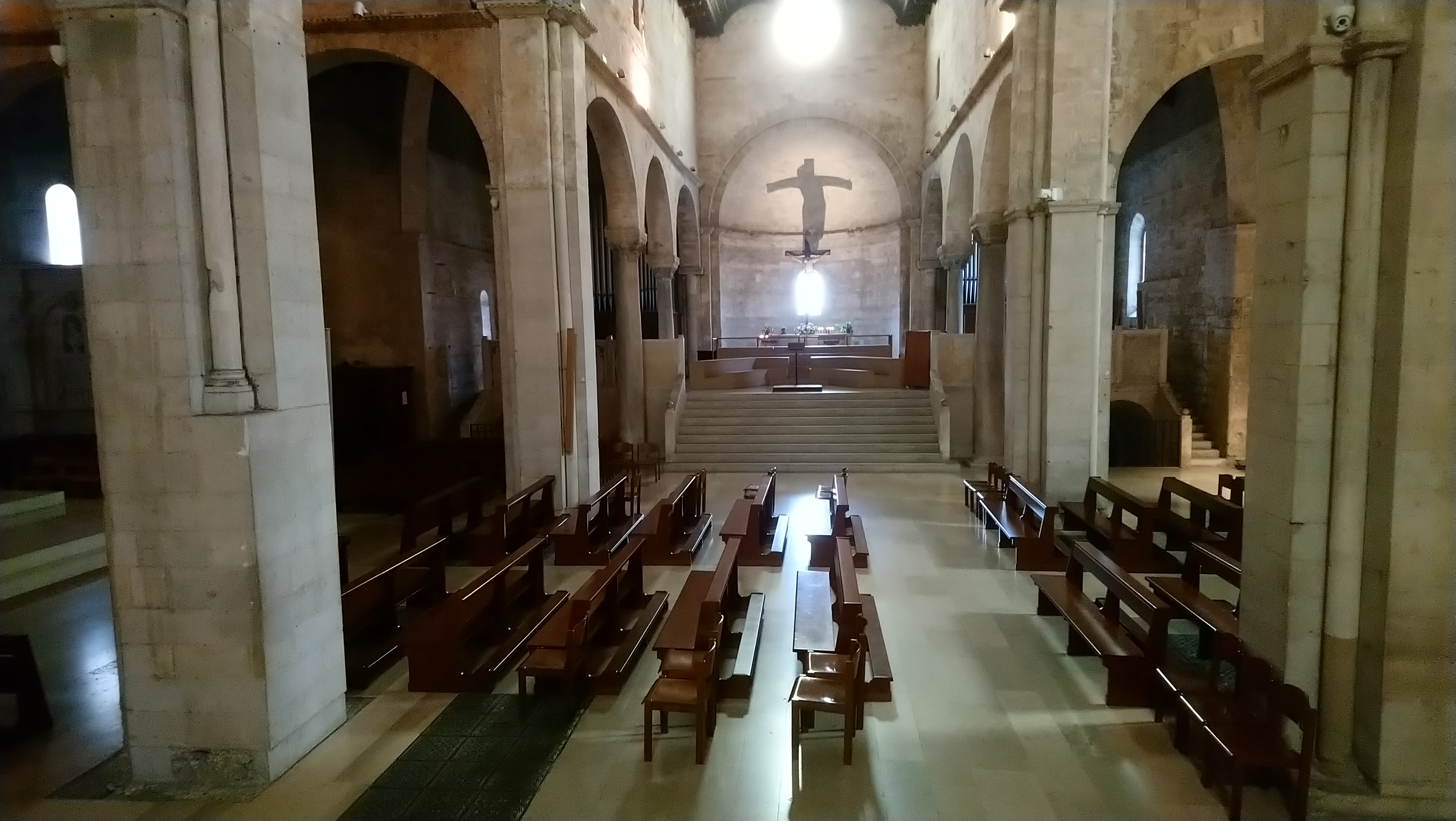
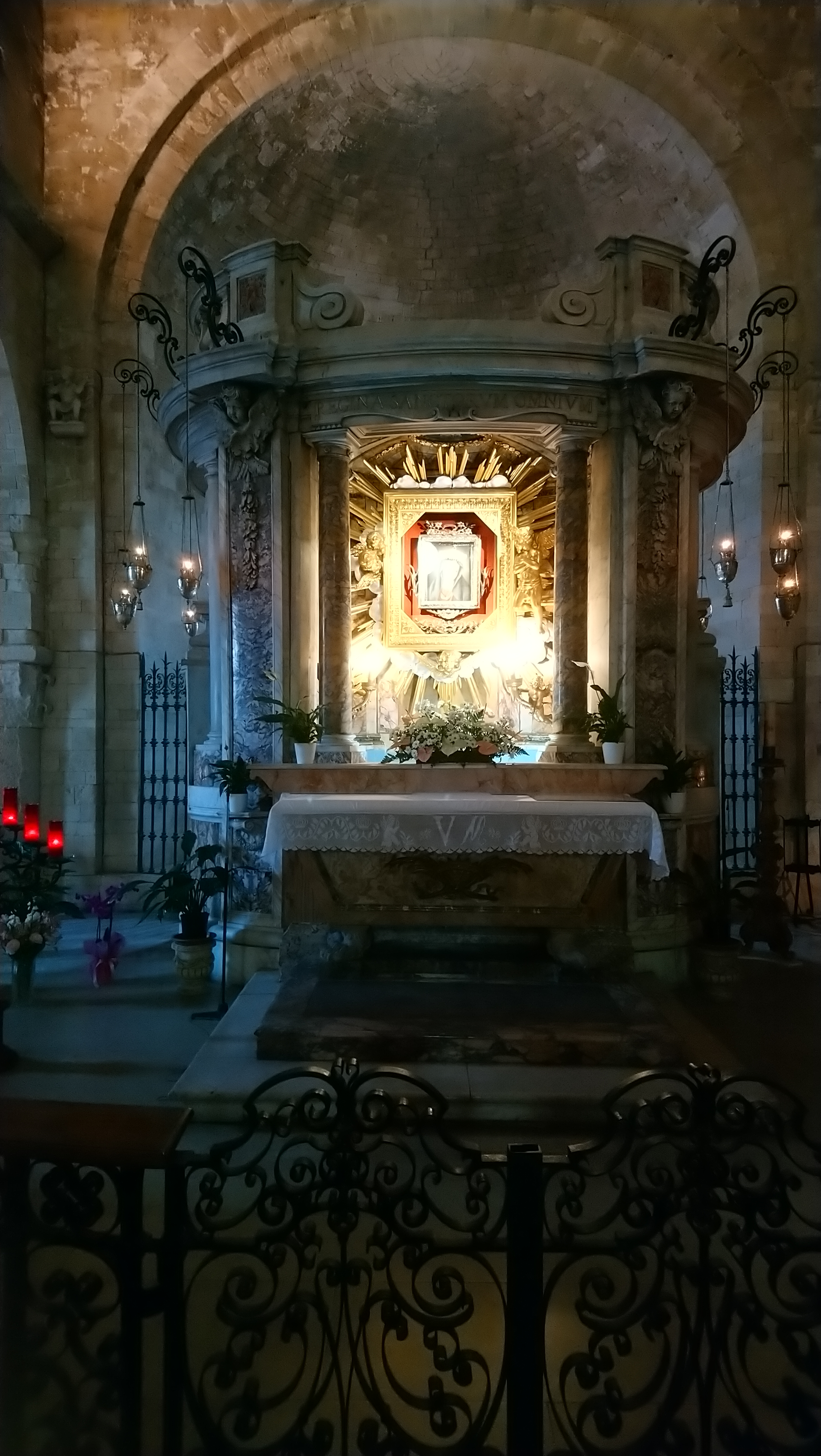
Inside the cathedral, a school group was being given a rather enthusiastic lecture by their megaphone-wielding teacher. In the crypt, we discovered several macabre but beautifully ornate, gold-encrusted sarcophagi containing former abbots (or their equivalents). As with most Catholic churches, the walls were adorned with paintings and murals, many incorporating lavish amounts of gold leaf. But by far the most striking feature was the haunting shadow cast by a strategically placed spotlight in front of a statue of Christ on the cross. That effect alone made the visit worthwhile.
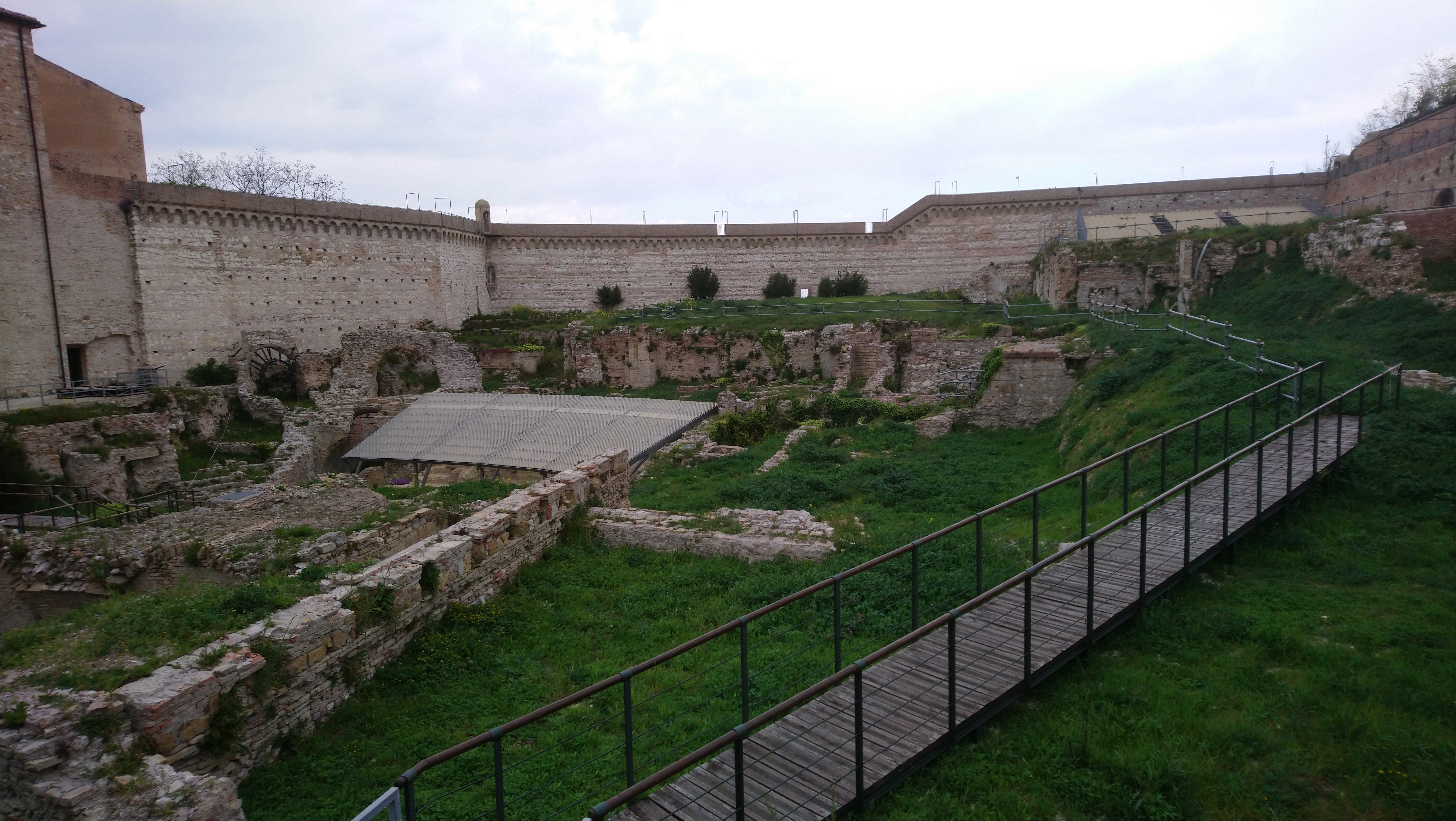
From the cathedral, we walked to the nearby amphitheatre. Though it wasn’t open, far too early in the year, this didn’t prove to be a disappointment, as everything could be seen from the perimeter wall, and the information boards were available in both Italian and English. It was clear that the town had once placed great emphasis on this historical site, but in recent years, maintenance had been somewhat neglected. A viewing area set to one side, with modern seating, had several bushes growing through the structure, giving the impression of gradual decline, a real shame.
We continued up the hill, passing an ancient Roman cemetery with block headstones scattered across the site, fenced off from public access. Eventually, we reached the old lighthouse, from where we could make out the outline of the ancient port below. A brief shower forced us to take shelter beneath a large holly tree before we made our way back to the comfort of our Fiat Panda.

That evening, we fittingly dined on Italian cuisine at the hotel before retiring for an early night.
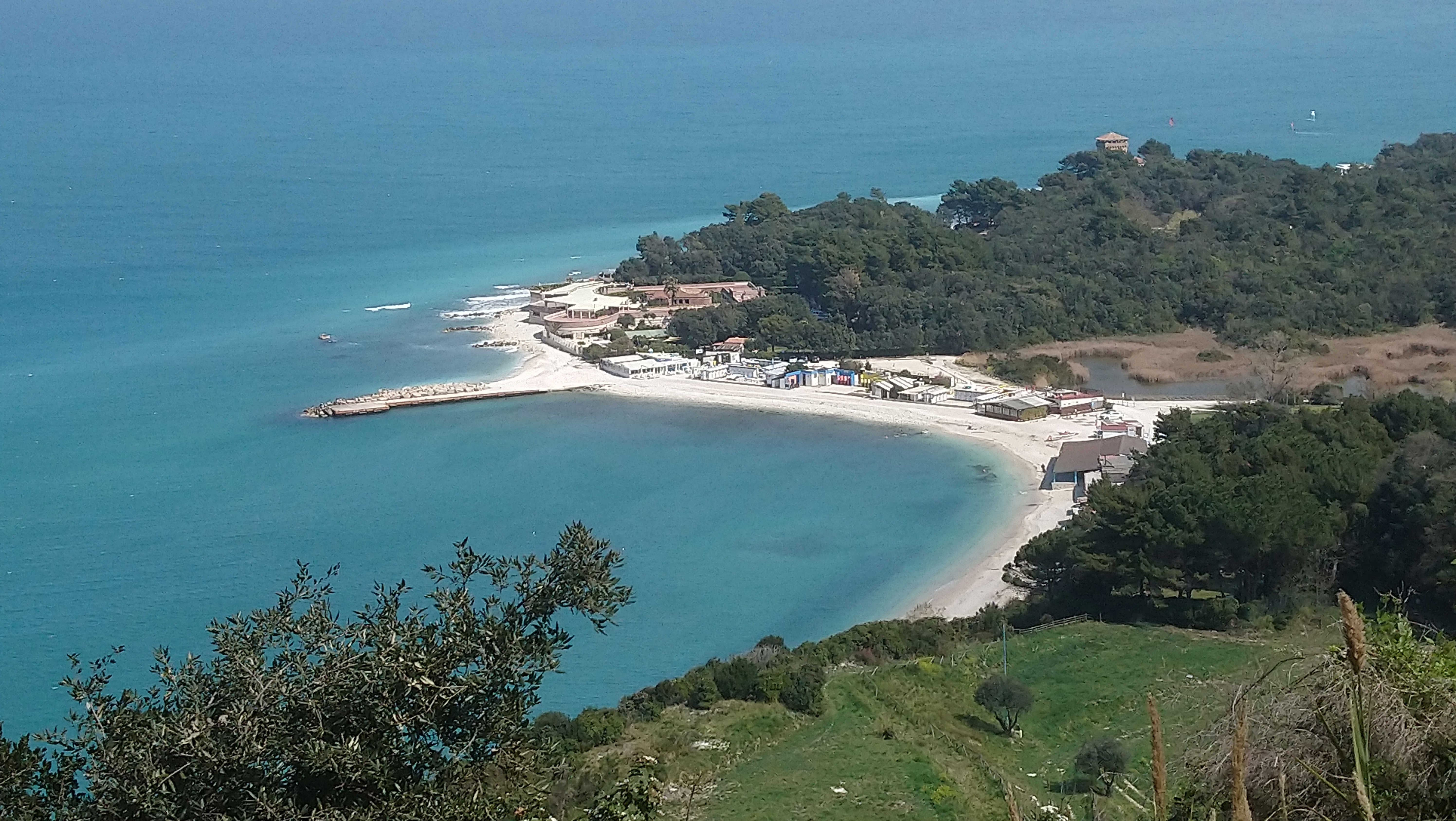
The following day, we took a short drive down the coast along a winding, spectacular coastal road to Portonovo. The descent from the towering cliffs above to the beach was breathtaking. This former fishing hamlet lies at the foot of Monte Conero, nestled within the beautiful and unspoilt Conero Nature Reserve. The landscape was formed millions of years ago when part of the mountain slipped into the sea, creating this stunning coastal haven, well worth a visit.
On the beach, we encountered a group of students armed with quadrats, busily engaged in counting shells. We watched for a while before turning our attention to the windsurfers, who were flying along the water in challenging conditions, the stiff breeze making their sport even more exhilarating.
Satisfied with our time on the pebbly beach, we took a brief detour along a woodland trail behind the car park, where we discovered a small, picturesque lake. Aside from a couple of sleeping ducks, we had the place to ourselves. The path formed a circular route of several kilometres, but with my knee acting up, we decided against walking it. If I were to continue driving, it wasn’t worth the risk.
Instead, we drove to the far end of the beach and found a sunny bench, where we sat contentedly, chatting and watching cormorants diving for fish. A friendly dog came over to say ciao, but, seemingly unimpressed by our lack of Italian, quickly returned to its owner. What do they teach them at kennel school these days? Certainly not English.
On our way back to the car, we paused again by another small, reedy lake, procrastinating happily as we listened to the noisy mating calls of several hidden Casanova frogs.
 We returned to the hotel by a different, less interesting route, made worse by having to negotiate a couple of uniquely Italian road junctions, where the apparent strategy is to roll a dice, slam your foot on the accelerator, and cut across several lanes of oncoming traffic, hoping you throw a six. I did. Twice!
That evening, we dined at a small restaurant below the hotel. Sue had a decent meal, but I did not. Apparently, Pizza Pecorino is not a delicious, strong-flavoured cheesy pizza as I had imagined. Instead, it was a flat, dry, burnt bread base, piled 5cm high with rocket leaves, topped with exactly four 2cm cubes of brie, and crowned with a lonely twirl of spiced ham. Hmm. I really wish my Italian vocabulary extended beyond Grazie!
After breakfast, we set off for Santa Vittoria, hitting the road just after 10 a.m. Italian roads, including motorways, are eerily quiet in April compared to their British counterparts. If it weren’t for the constant need to check your rear-view mirror for the Roman charioteer tailgating within a metre or two of your bumper, you could probably sneak in a nap or two on a long journey. However, I quickly caught on to the Latin psyche for overtaking: wait for a blind bend, preferably near the crest of a hill, and ensure there is oncoming traffic. That is the perfect moment! Even better if there are a couple of slower cars ahead of you, why pass one when you can pass three at once? I suppose the assumption is that all Italian cars have engines built by Ferrari. Mine certainly didn’t.
We took the motorway down the coast to Porto Civitanova, where we spent a pleasant couple of hours soaking up the sun and exploring some of the sights this relaxed seaside holiday town had to offer. The most memorable moment was the midday chimes from an imposing clock tower fronting the town church, conveniently located next to the marina. The melody was pleasant but lasted a good five minutes, probably not ideal if you work shifts and need daytime sleep, though I imagine the locals have grown accustomed to it. That said, it was rather tuneful.
After stretching our legs with a walk along the harbour wall, we reached the little green-painted lighthouse at the end. There, we took a moment to cogitate over the graffiti murals on the opposite sea wall, some genuinely artistic, others more “enthusiastic.” We agreed on the ones we liked and dismissed the rest as Banksy wannabes.

Returning to the car, we headed inland, deep into the countryside. After leaving the coastal plain, we began a steady ascent, at first skirting around and beneath the hilltop towns so characteristic of Tuscany and the lesser-known Marche, before eventually winding our way up through these picturesque medieval settlements. We stopped to explore a few of them, always pausing to admire the spectacular views from a central piazza or the pinnacle of a church. Over the next few days, we were to discover that while each of these small towns has its unique character, they all seem curiously devoid of inhabitants. Only on Sunday did we see more than half a dozen people at any one time, and, as expected, they were on their way to church.
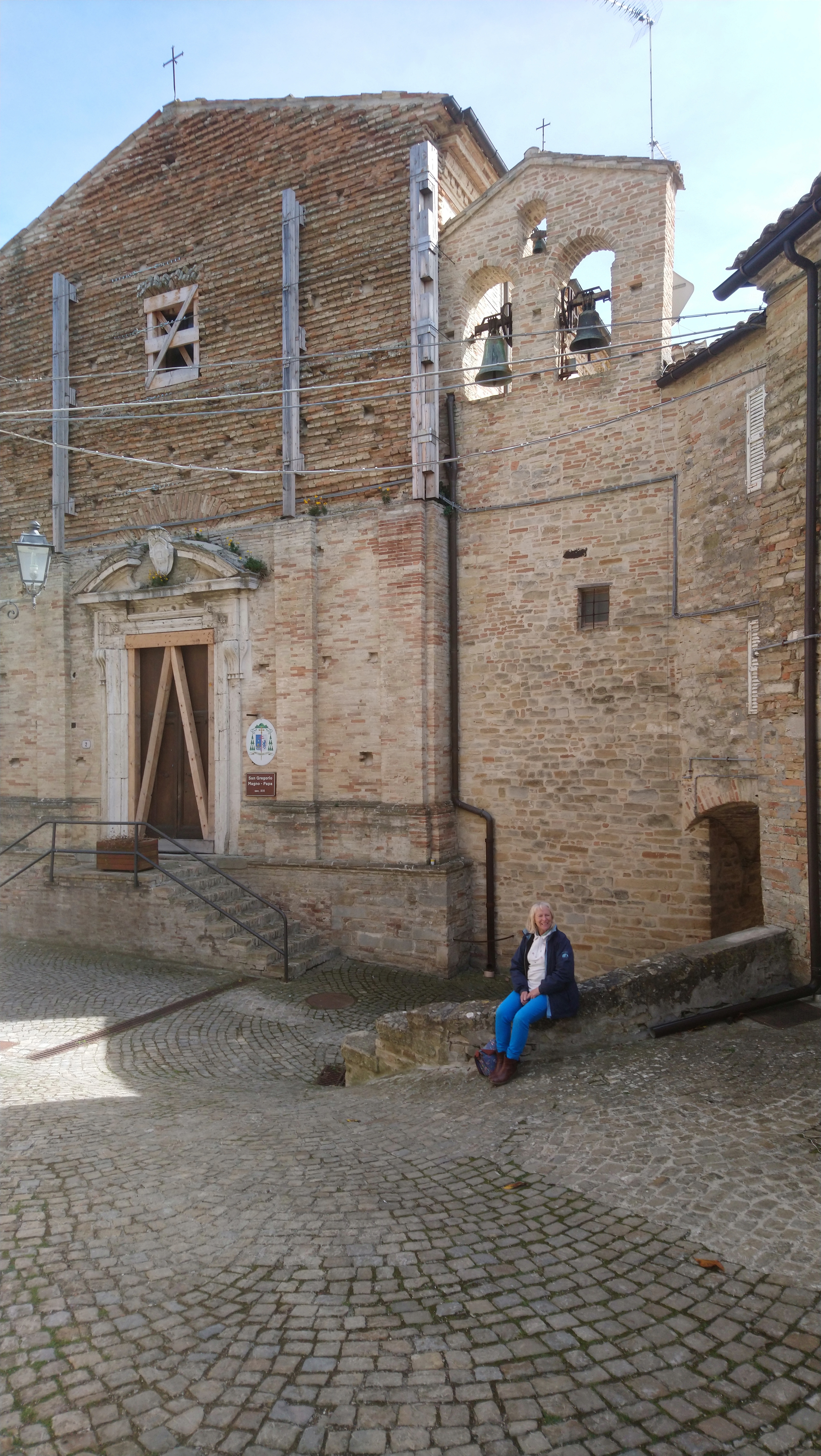
It was around 4 p.m. when we parked beside Phil’s car outside the freshly whitewashed farmhouse that Joan and Phil have called home for the past twelve years. Many of the less solidly built structures in the area, particularly those in the town above, have fallen victim to the region’s frequent earthquakes. Some have collapsed entirely, while others remain precariously upright, held together by enormous wooden supports. For those of us unfamiliar with Italian (or Catholic) priorities, it is bewildering to see churches being repaired long before the homes that people actually live in. Many families and individuals are still housed in hotels and B&Bs, with little hope of a return to their own homes for years to come. Why they accept this situation is beyond me.
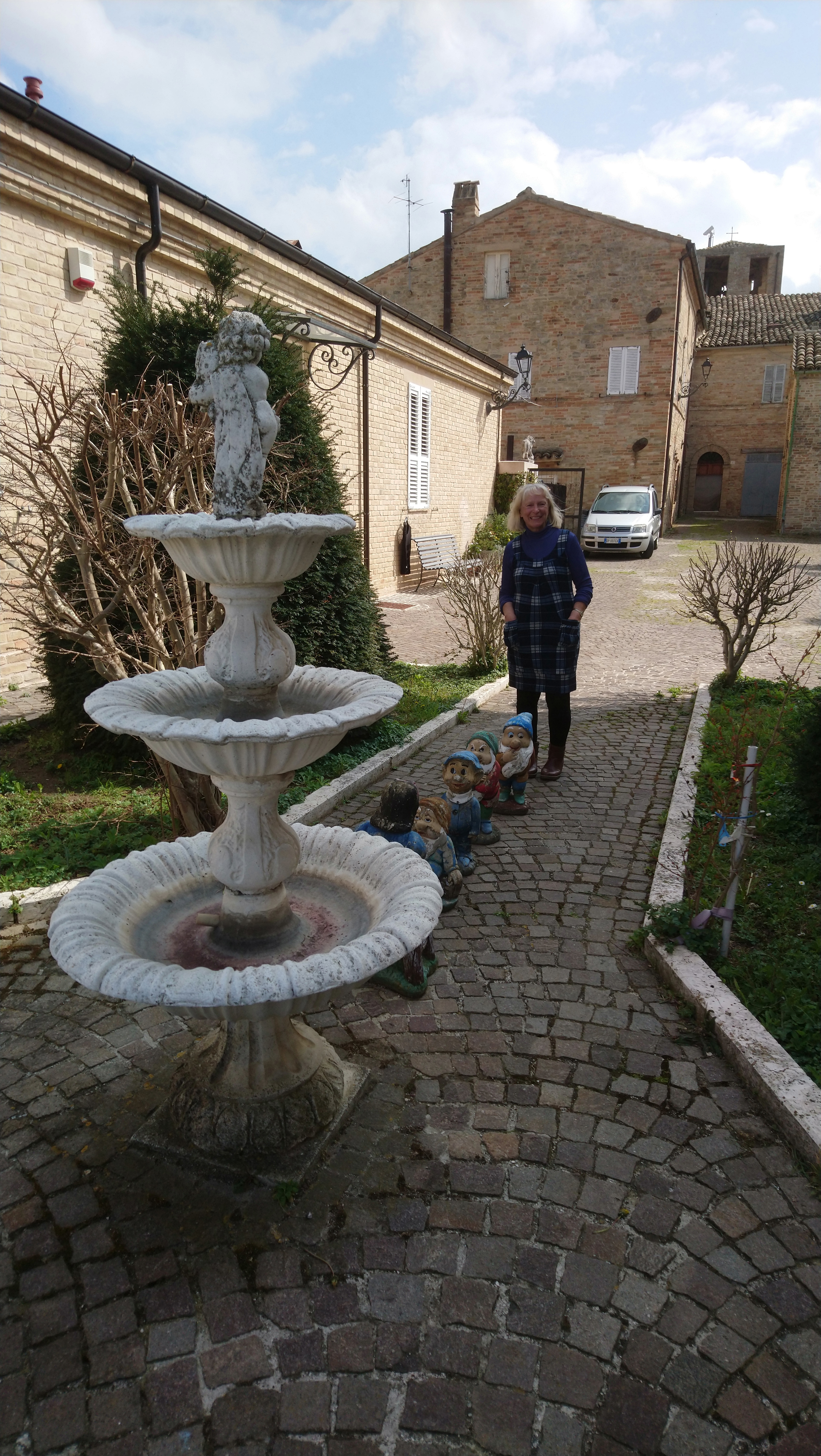
We had last seen Joan and Phil just before Christmas, and they had changed very little, seemingly pleased to have some company after what had been a particularly cold and inhospitable Italian winter. They have fully embraced the rural Marche way of life: living simply, eating fresh food, drinking local wine, and enjoying the peace and tranquillity of their rustic surroundings. Phil has his music (a vast collection of CDs) and technical magazines, while Joan has her books and a garden that demands far more than average horticultural skill.
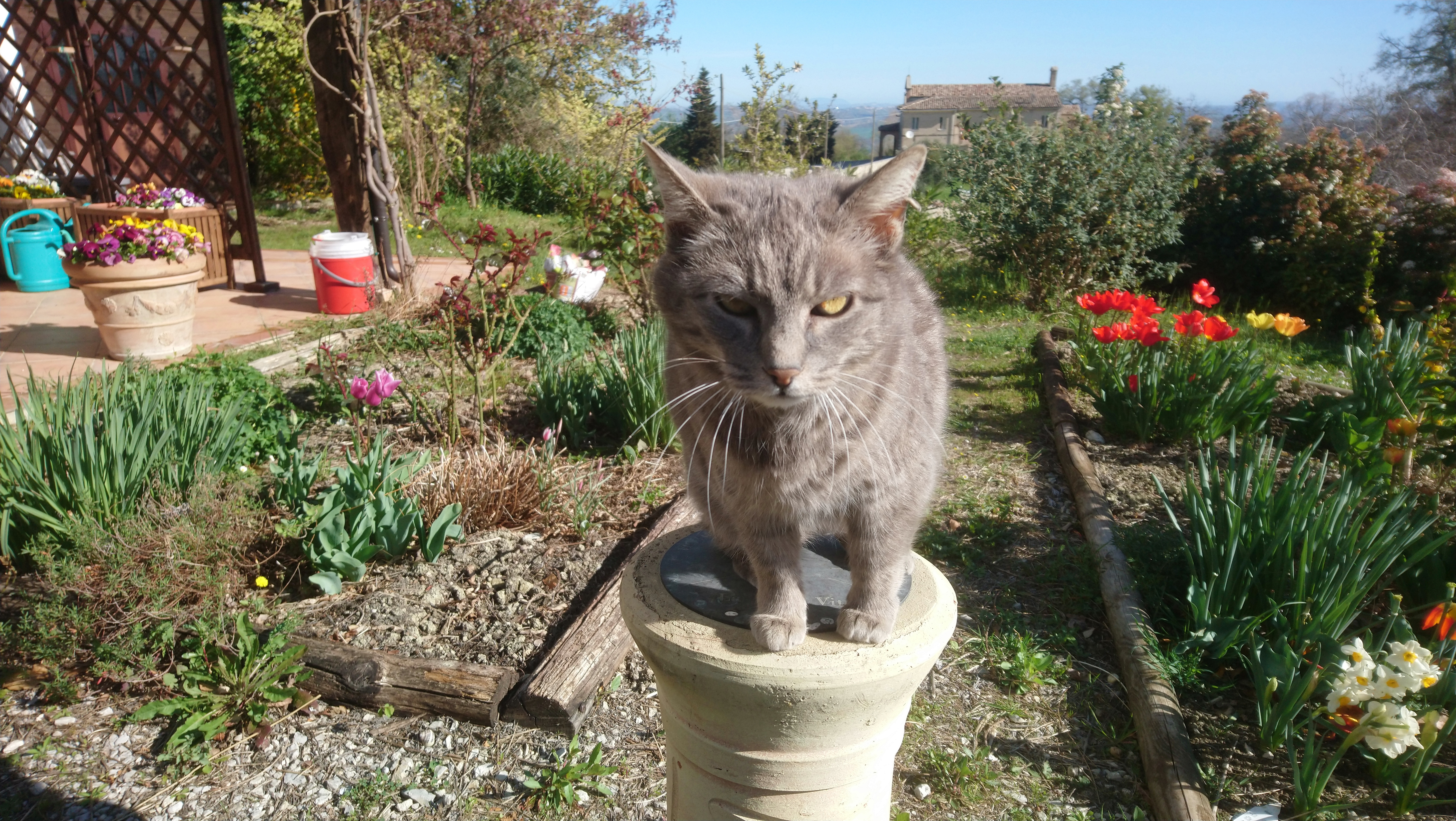
Oh yes, and they have a cat.
The cat lives outside under the veranda. It was originally one of several pets belonging to a British family down in the valley, but when they left to return to the UK a couple of years ago, it sensibly made its way to the white house below the town, where it knew it would find a home. Though Joan and Phil outwardly maintain that they do not own the cat, it is well-fed, well-watered, and provided with a comfortable place to sleep. The cat, of course, knows better.

We stayed for five days. The weather was kind to us, certainly better than what those back in the UK were experiencing. Most days were bright, sunny, and warm, though occasionally, at the more exposed sites we visited, a brisk northerly breeze invited us to add an extra layer of clothing.
Having our own transport allowed us to revisit many of the surrounding towns I had first explored with Joan and Phil when Roger and I came in the early years of retirement. As expected, little had changed, except that many buildings were now braced with supports, and the streets were even quieter than before. Some of the churches were open, and we always took the opportunity to step inside, often coming across beautiful frescoes, intricate architectural details, and occasionally an English description to aid our understanding.
A particular fascination of ours is visiting the cemeteries attached to each settlement. We can spend ages speculating on how the deceased met their end, deducing stories from the dates, ages, and photographs supplied on each internment. Identifying recurring family names has also become an oddly absorbing habit, a quiet diversion as we wander through these peaceful resting places.
Here is a list of the hilltop towns we visited:
- Montelparo
- Monteleone di Fermo
- Servigliano
- Montefalcone Appennino
- Smerillo
- Monte San Martino


One morning, a vintage car rally passed through Santa Vittoria, so we spent a pleasant hour watching the rather noisy but lovingly restored and polished vehicles rumble into the town square, collect a ticket, and then roar away under the clock tower.
We also spent several hours walking around Lago del Tenna. Both Sue and I, as well as Roger and I, have dined at the lakeside restaurant in the past with our hosts, but we had never attempted to walk around the lake. A well-marked path is supposed to take you on a complete circuit, but part of the route has been washed away by the river that feeds into the lake, making it impossible to follow the mapped trail. This must have been the case for several years now, as evidenced by the tree growth on the eroded section, yet none of the signage has been updated to reflect the change. Having already walked more than half the route, we had little choice but to return to the car via the less satisfactory roadway. I suppose, given the earthquake damage in the region, the authorities have more pressing concerns.
Both Joan and Phil (despite being vegetarians) are exceptional cooks, and eating with the Smiths is always a treat. Coupled with their own blend of wine, the evenings passed far too quickly. As two couples, we did sample the local cuisine, an evening meal at the Farfense in town and lunch at a roadside café in Ponte Maglio. Both meals were excellent (though Sue was less impressed with the latter), but neither could quite match the standard of our hosts’ daily offerings. Casually described as simple fare, their cooking was more than worthy of a Michelin star or two. I can see why Phil has put on a bit of weight!
Our short stay in Santa Vittoria came to an end at 5:30 am on the 10th, with Phil, Joan, and Cat waving us off under a chilly, star-bright sky. We made good progress back to Ancona with little traffic on the road. Stopping briefly just before the airport to refuel, we located the rental car park and dropped the keys into the box, as the staff had yet to come on duty.
 After a quick breakfast, we made our way through security and waited for the flight, which departed on time. Though we had been allocated seats in different parts of the aircraft, I had no one sitting on either side of me, so Sue joined me. I slept for most of the journey.
The drive home was interesting, notably because we avoided the dreaded roundabouts, which were being worked on, but we did encounter a series of misleading A14 E diversion signs all the way to the Wellingborough turn-off, before Kettering! I can only assume that some clueless workers were given signs to indicate an A14 eastbound diversion, but, in the dark (like us), mistakenly placed them along the westbound carriageway instead, dropping them off at every turn-off until they ran out. I can’t think of any other explanation. More bafflingly, why were they still there a week later? Perhaps no one dared to admit the mistake and retrieve them! I will never know, and, frankly, I don’t care anymore.
Since returning, we have been looking after Ellis (who is on half-term) and Harry (the greyhound) while Charlotte tends to her clients’ gardens. The weather has been good, the grass is growing, the blossom is bursting, and my onions and broad beans have just poked their noses out of the soil, perfectly timed for a run of night frosts.
On our return from Italy, Sue telephoned the hospital where Stanley was being cared for and was told that he had deteriorated rapidly. The nurse didn’t think he had long left. As the only available day in our schedule, we planned a visit for the 17th.
The day before our journey north to Salford Royal Hospital, Peter, Harry, and I travelled to Newbold Verdon to work on Sarah’s summerhouse while she was recovering from her operation. Meanwhile, Sue took Ellis to see Dumbo at the cinema in Kettering while Charlotte tackled a large garden project in Harborough. Later, Sue rang the hospital again and was relieved to hear that Stanley had rallied and was doing better. We would see for ourselves the next day.
Update: We visited Stanley for around half an hour. He is now blind, has difficulty hearing, and struggles to breathe due to a significant amount of fluid on his chest. He spends most of his time asleep. True to form, he was quite cantankerous, complaining about the surgeons, doctors, nurses, food, everything, really, in the brief time we were there. His mind, however, remains as sharp as ever.
It was clear that he had had enough of our visit, and after a while, he politely asked us to leave. Surprisingly, he looked well, though, according to the nurses, he isn’t eating much, and his condition is far from good.
Before heading to the hospital, we stopped by Stanley’s house to check on it. The property had been cleared, cleaned, painted, and re-carpeted and was in good order. He had placed a couple of mats in the lounge near the kitchen door, and we suspect these may have contributed to his fall. As everything seemed fine, we only made a brief visit before driving to Blackleach Park to eat our packed lunch while waiting for the afternoon hospital visiting hours.
On our way home to Harborough, we stopped by to see Sarah, and I filled the back of the car with firewood that Lee had been saving for us.
 Palmer Family
Leave a comment